100 famous film and TV homes. What happened after the cameras left?
Share this
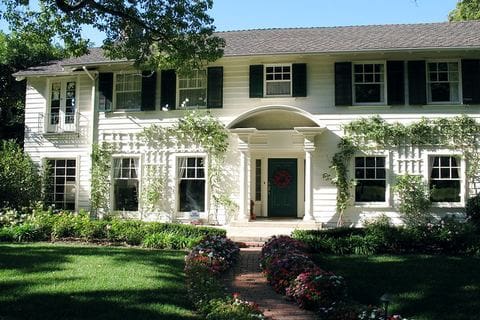
Mrs Doubtfire houseDownton Abbey
Iconic houses. Real places. What happened next?
100 locations
No homes match that search. Try a film title, a show or a place.
Fame adds visitors, not value
Only 14 of these 100 homes sold at a clear premium, and most of those came from a bidding war or decades of local price growth. 29 sold at a loss or are stuck on the market. 33 make their money from visitors, guests or tours instead.
The stories
Showing all 100 homes
FilmSold at a premium
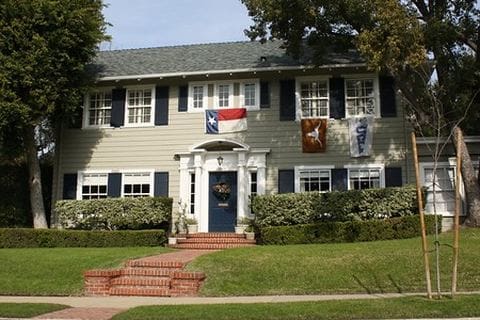
A Nightmare on Elm Street
West Hollywood, California, USA
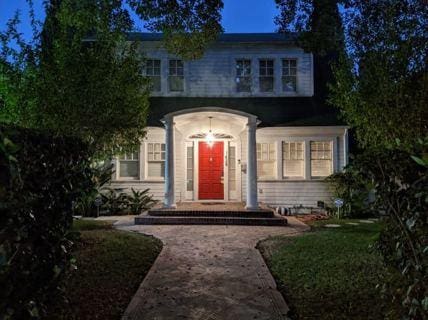
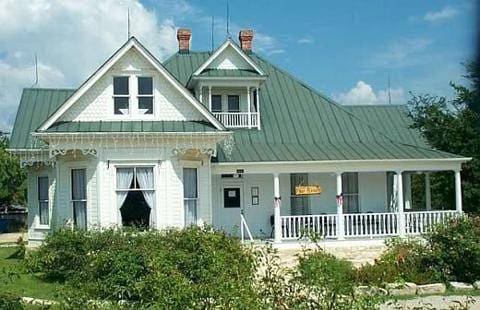
Nancy's house in A Nightmare on Elm Street (1984)
Freddy's premium
It was Nancy Thompson's house in Wes Craven's A Nightmare on Elm Street (1984). Bo Burnham later filmed his Netflix special Inside in its guest house.
Read the full story
The house
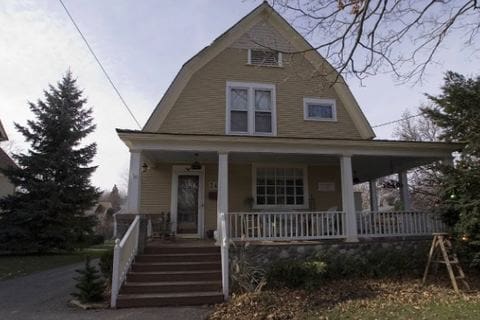
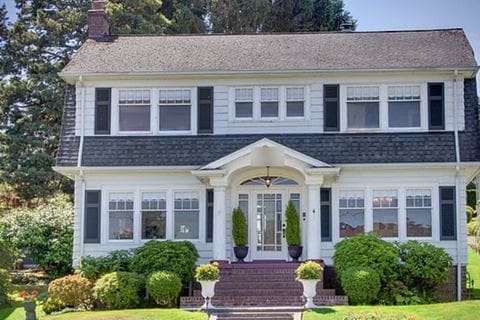
A 1919 Dutch Colonial house with a green roof in Spaulding Square, West Hollywood.
The full story
The house appears as 1428 Elm Street in the film, though its real address is on North Genesee Avenue. The neighbourhood is a favourite for directors wanting small-town America.
The famous red door has been painted black, but tour buses still stop. Here the film is a pure asset: fame with no tragedy attached.
Where it stands now
Bought for $2.1 million in 2013, listed at $3.25 million with bids due by midnight on Halloween 2021, and sold for $2.98 million. Realtor.com said that was almost double nearby homes.
The numbers
Bought
$2.1m (2013)
Listed
$3.25m (2021)
Sold
$2.98m (2022)
SourcePhoto: Roller Coaster Philosophy, CC BY 2.0, Flickr
Share this story
FilmEarns from visitors
The Poltergeist house
Simi Valley, California, USA
The Freeling family home in Poltergeist (1982)
Now a holiday let
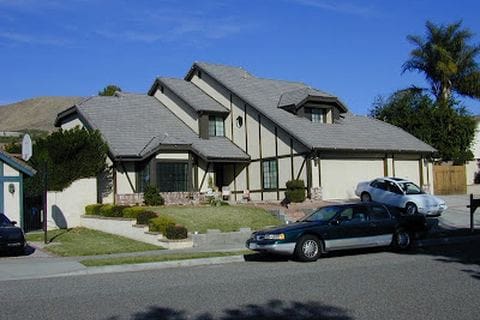
It was the Freeling family home in Poltergeist (1982), with key scenes shot inside and out.
Read the full story
The house
A four-bedroom 1979 house on Roxbury Street in Simi Valley, California.
The full story
The original owners bought it new in 1979, a couple of years before filming, and kept much of its look.
The investor who bought it turned fame into income: the holiday let recreates the living room and TV set, and the house rules ban Ouija boards on pain of a cleansing fee.
Where it stands now
On sale for the first time in 45 years in 2024, it sold for $1.28 million, over $100,000 above asking. The buyer rebuilt the rooms to match the film and lets it from $600 a night.
The Sawyer family house in The Texas Chain Saw Massacre (1974)
Moved and made a restaurant
It was the Sawyer family home in The Texas Chain Saw Massacre (1974).
Read the full story
The house
A Victorian farmhouse, originally in Round Rock, Texas.
The full story
The land where it once stood is now a mixed-use development. Rather than lose it, owners moved the house, restored it and turned it into a restaurant.
Fans can eat in the rooms where the film was shot. A house that would have been demolished became a destination because of a film.
Where it stands now
Cut from its foundations and moved about 60 miles to Kingsland in the 1990s, it became the Grand Central Café in 2012. New owners bought it in 2022 and promised to keep its horror history.
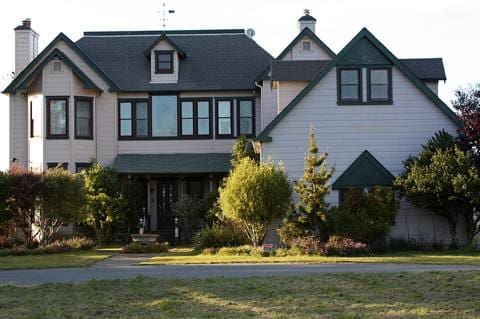
It was Stu Macher's house, where the finale of Scream (1996) was filmed.
Read the full story
The house
A large rural house near Tomales, northern California.
The full story
The house used for Stu Macher's home in Scream (1996) is a large rural property near Tomales, in Sonoma County, north of San Francisco.
The film's long final act, including the party and the killers' reveal, was shot there, making it one of the most recognisable horror locations of the 1990s.
Its owner began letting it on Airbnb in 2021, and has hosted themed Halloween parties with tickets priced at $325.
It shows a newer way to profit from fame: not selling the house at a premium, but renting out the association by the night and by the party.
Where it stands now
Its owner began letting it on Airbnb in 2021 and hosts Halloween parties there, with tickets at $325.
The Myers house and Laurie Strode's house both appear in John Carpenter's Halloween (1978).
Read the full story
The house
Two houses a short walk apart in South Pasadena, California.
The full story
John Carpenter's Halloween (1978) was made on a small budget, and much of it was shot in South Pasadena, California, standing in for the fictional Haddonfield, Illinois.
The house used as Michael Myers' childhood home was a run-down property at the time. In 1987 it was moved to a new site to save it from demolition, restored, and turned over to office use. Fans still come every October to photograph it.
The house used for Laurie Strode's home, a short walk away, stayed a family home. Its owners became known for greeting trick-or-treaters in character. It sold in 2023.
Neither house was the scene of a real crime, so neither carries a stigma. They carry fame instead, and that has kept both standing and visited for more than 45 years.
Where it stands now
The Strode house owners were known for greeting trick-or-treaters in character; the house sold in 2023. The Myers house draws fans every October.
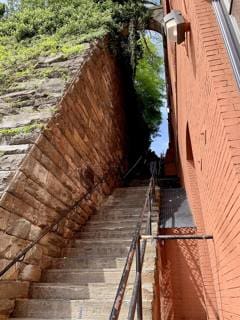
The steps beside the MacNeil house in The Exorcist (1973)
A pilgrimage site
Father Karras falls down them in The Exorcist (1973); the house next to them was used for filming.
Read the full story
The house
A steep flight of 75 steps beside a house on Prospect Street in Georgetown, Washington DC.
The full story
The steps are a steep, narrow flight of 75 stairs running from Prospect Street down to M Street in Georgetown, Washington DC.
In The Exorcist (1973), Father Karras throws himself down them at the film's climax. The house beside them was used as the MacNeil family home, with a false wall added to bring the bedroom window closer to the steps.
The film was loosely based on a 1949 case involving a boy in Maryland and an exorcism carried out in St Louis. The author, William Peter Blatty, studied at Georgetown University.
The house remains a private home, but the steps became an official city landmark with a plaque unveiled in 2015. They show that fame can attach to a place rather than a building, and keep drawing visitors decades later.
Where it stands now
The house is private, but the steps are one of Washington's best-known film sites and a fixture of fan visits.
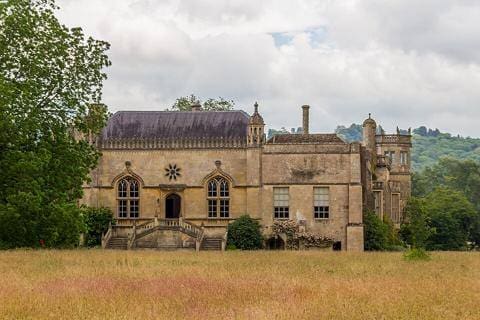
It was the exterior of Hill House in The Haunting (1963).
Read the full story
The house
A Gothic Revival mansion near Stratford-upon-Avon, Warwickshire.
The full story
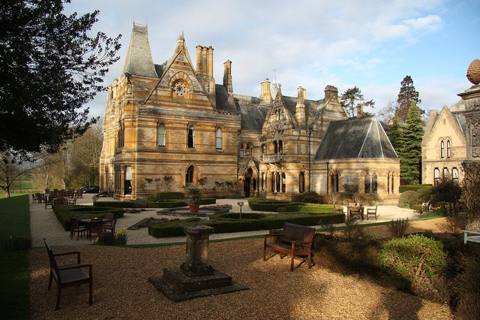
Ettington Park, near Stratford-upon-Avon, has one of the longest ownership histories in England. The Shirley family is recorded on the land at the time of the Domesday Book and still owns it.
The present house is a Victorian rebuild in High Gothic style, with carved stone, towers and dark interiors. That look is exactly why it was chosen as the exterior of Hill House in Robert Wise's The Haunting (1963), one of the most admired haunted-house films ever made.
The house has since been leased and run as a hotel, and it uses the film as part of its history.
It shows the pattern for film-set houses: the fame is borrowed, harmless and marketable, and it sits comfortably alongside heritage value.
Where it stands now
It is now a hotel and uses the film as part of its history.
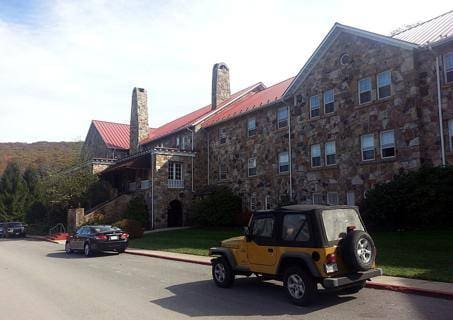
Inspired Stephen King's The Shining, and starred in the 1997 TV series
The Shining's inspiration
Stephen King stayed here, and it inspired the Overlook Hotel in The Shining.
Read the full story
The house
A grand hotel in Estes Park, Colorado.
The full story
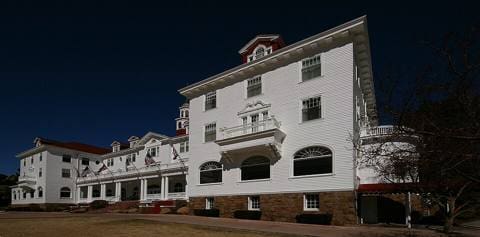
The Stanley Hotel opened in 1909, built by F. O. Stanley, co-inventor of the Stanley Steamer car, on a hill above Estes Park in the Colorado Rockies.
In 1974 Stephen King and his wife stayed there on the last night before it closed for the winter. They were almost the only guests, in room 217. The empty corridors became the Overlook Hotel in The Shining, published in 1977.
Stanley Kubrick's 1980 film was not shot there; its exteriors used Timberline Lodge in Oregon. But the 1997 television miniseries of The Shining, written by King himself, was filmed at the Stanley.
Today the hotel runs ghost tours, a channel that plays The Shining on a loop, and bookings for room 217. A building that could have been just another mountain resort has built a whole business on one guest's bad dream.
Where it stands now
The hotel runs a TV channel that plays The Shining on repeat.
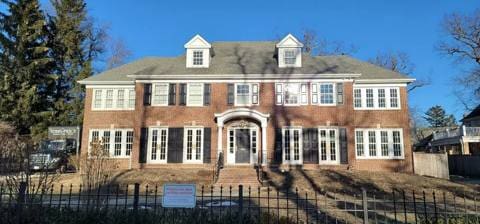
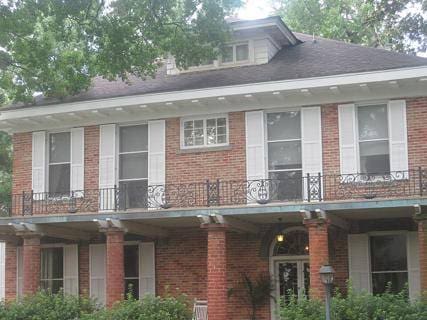
It was the McCallister family home in Home Alone (1990), where Kevin, left behind at Christmas, defends the house against two burglars. Its agent has called it one of the most Googled houses in the world.
Read the full story
The house
A red-brick Georgian house built in 1921 on a leafy street in Winnetka, a wealthy suburb north of Chicago.
The full story
The house was used for the exterior and many interior scenes. The 2012 buyers later expanded and renovated it, but kept the front door and the central staircase Kevin sleds down.
When it came back to market in 2024, the agent said there was no big 'Home Alone bump' in the price: it was a large, renovated house in one of the most expensive towns in Illinois. The buyers still paid $250,000 over the asking price within a week.
The house shows the gentler side of screen fame: a film everyone loves, attached to a house that was valuable anyway, adds interest without adding stigma.
Where it stands now
Its first owners after the film listed it in 2011 at $2.4 million, hoping the fame would help in a weak market. After cuts to $1.95 million it sold in 2012 for $1.585 million. Listed again in May 2024 at $5.25 million, it drew a $5.5 million offer, above asking, within a week.
The Brady family home in The Brady Bunch (1969–74)
Bought as a fan project, sold at a loss
Its exterior was used as the Brady family home in The Brady Bunch (1969 to 1974), and it has been called the second most photographed house in America after the White House. The interiors were filmed on a studio set.
Read the full story
The house
A mid-century split-level house in Studio City, Los Angeles.
The full story
After the original owners' deaths, the house came to market in 2018 and attracted interest well beyond its value as a home.
HGTV bought it and, with the six actors who played the Brady children, rebuilt the interior to match the television set, adding about 2,000 square feet including a new upper floor. The work featured in the 2019 series A Very Brady Renovation.
In 2023 it was listed at $5.5 million. The listing agent admitted it was impossible to value against other homes and 'not a home anyone would ever live in'. It sold for $3.2 million, a large loss on the network's outlay, with part of the proceeds going to a children's hunger charity.
It is the clearest example on this map that nostalgia has a price ceiling: fans loved the house, but the market paid for a house.
Where it stands now
It was listed at $1.885 million in 2018. HGTV outbid others, including the singer Lance Bass, paying $3.5 million, then spent about $1.9 million making the inside match the TV set. Listed at $5.5 million in 2023, it sold for $3.2 million.
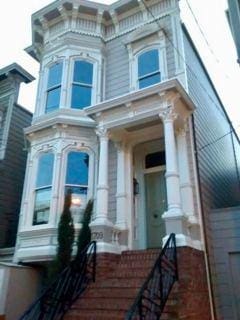
Its exterior appeared in the opening credits of Full House (1987 to 1995) as the Tanner family home. The show itself was filmed in a studio in Los Angeles.
Read the full story
The house
A three-storey Victorian house on Broderick Street in San Francisco's Pacific Heights area, built in the 1880s.
The full story
The creator, Jeff Franklin, bought it planning to recreate the house as seen on screen and use it to promote the sequel series, Fuller House.
Neighbours objected to the prospect of more fans, and San Francisco banned large commercial vehicles, including tour buses, from that stretch of the street.
After spending around $6 million in total, he sold for $5.35 million. The next owners listed it at $6.5 million and accepted $6 million. For all its fame, the house has not beaten the market by much.
Where it stands now
The show's creator bought it for $4 million in 2016 and spent about $2 million restoring it to its TV look. Neighbours opposed the extra attention and the city banned tour buses on the street. He sold it in 2020 for $5.35 million, never having lived there. It later sold again for $6 million, below its $6.5 million asking price.
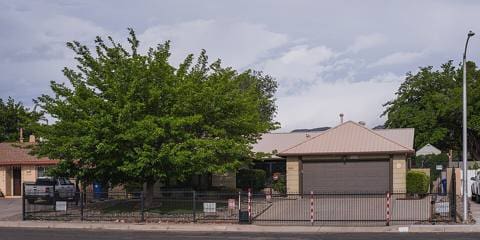
It was Walter White's home in Breaking Bad (2008 to 2013). A family who had lived there since 1973 agreed to its use after a location scout knocked on the door in 2006.
Read the full story
The house
A single-storey, four-bedroom ranch house in a quiet neighbourhood of north-east Albuquerque.
The full story
The owners let the production use the house for all five series. As the show's fame grew, so did the visitors, day and night.
The most notorious habit was fans copying the scene in which Walter White throws a pizza onto the roof. The family eventually fenced the property and installed security cameras.
After both parents died, their children decided to sell. The listing agent said the $4 million price was based on the home's 'iconic value and worldwide notoriety', more than ten times the estimate for a similar house nearby.
It is the sharpest test on this map of what fame is worth: whether a buyer will pay for the story, not the square footage.
Where it stands now
The family says about 300 cars a day still stop outside. After fans repeatedly threw pizzas onto the roof, re-enacting a famous scene, they put up a fence and cameras. In January 2025 they listed it for $4 million, against an online estimate of about $343,000.
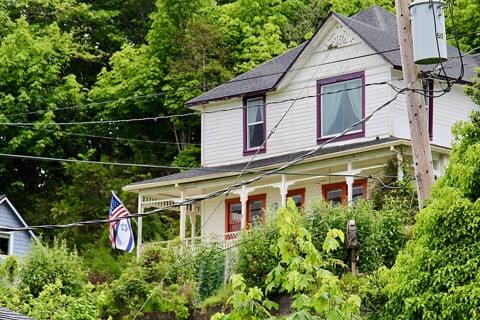
It was the Walsh family home in The Goonies (1985). Astoria holds a Goonies Day every 7 June, the film's release date, and thousands of fans visit the town.
Read the full story
The house
A Victorian house built in 1896 on a hillside in Astoria, Oregon, overlooking the mouth of the Columbia River.
The full story
The long-time owner had largely welcomed fans, and restored the house to its 1896 style.
When she sold, she passed on memorabilia and some furniture to the buyer, an entrepreneur who said he had loved the film since 1985. His childhood friend bought the house next door.
Here the fame sold the house quickly, to the one buyer who valued it most, but not for dramatically more than asking.
Where it stands now
Listed at $1.65 million in November 2022, it drew multiple offers at or above asking and an offer was accepted after six days. It sold for $1,650,777 to a self-described superfan who promised to preserve it.
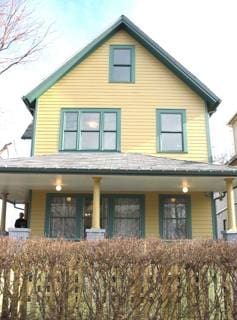
It was Ralphie Parker's family home in A Christmas Story (1983), complete with the leg lamp in the front window.
Read the full story
The house
A Victorian house built in 1895 on West 11th Street in Cleveland's Tremont neighbourhood.
The full story
The buyer, an entrepreneur who ran a company making replica leg lamps, reconfigured the house as a single-family home and a near-exact copy of the film set.
Over time he added the neighbouring Bumpus house, a museum of original costumes and props, a gift shop and car parks.
In 2022 he put the whole campus up for sale without a price; a former cast member said he hoped for $15 million. It sold in 2023. A $150,000 house had become a year-round tourist business.
Where it stands now
A fan bought it on eBay for $150,000 in 2004, restored it to match the film and opened it to the public in 2006. With a museum and gift shop across the street, it drew about 75,000 visitors a year. The whole site sold in 2023; the price was not disclosed.
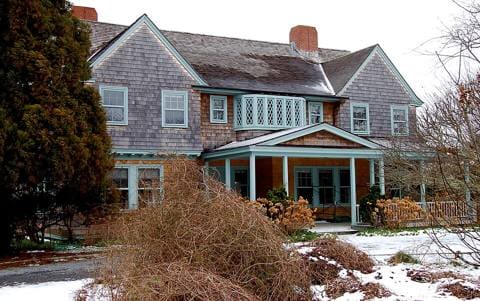
The Beales' decaying mansion in the documentary Grey Gardens (1975)
From $220,000 to $15.5m
It was the decaying home of Big Edie and Little Edie Beale, relatives of Jacqueline Kennedy Onassis, filmed in the cult 1975 documentary Grey Gardens.
Read the full story
The house
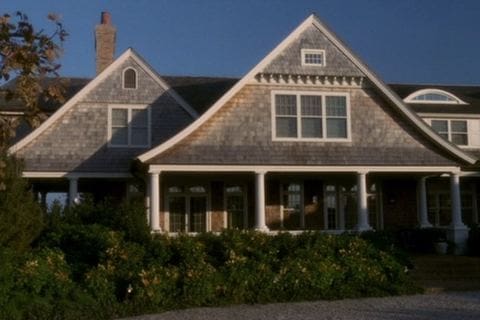
A shingle-style house built in 1897 on a 1.7-acre plot near the beach in East Hampton, New York.
The full story
By the 1970s the house was overrun with cats and raccoons, and most prospective buyers saw it as a teardown. Little Edie told the new owners all it needed was a coat of paint.
Bradlee and Quinn spent about $600,000 restoring it, and for decades it was a centre of Hamptons social life. After Bradlee's death, Quinn rented it out before selling.
The sale closed the day before the release of The Post, in which Tom Hanks played Bradlee. From $220,000 to $15.5 million, it is one of the biggest price rises on this map.
Where it stands now
In 1979 Little Edie sold it for $220,000 to the journalist Sally Quinn and Washington Post editor Ben Bradlee, on condition it was not torn down. They restored it. It was listed at $19.995 million in 2017 and sold that December for $15.5 million.
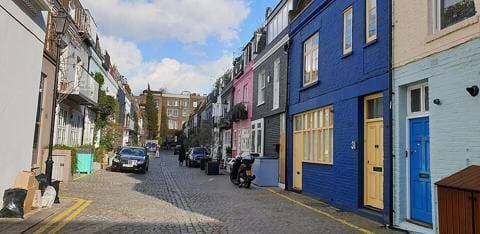
Juliet's house, scene of the cue cards, in Love Actually (2003)
The door went up for auction
In Love Actually (2003), Mark stands on Juliet's doorstep here with his famous cue cards. The mews became one of London's busiest film-location photo spots, to the point where residents and the council have asked visitors to stop crowding it.
Read the full story
The house
A cobbled mews of pastel-painted former stables in Notting Hill, west London.
The full story
The mews is in one of London's most expensive postcodes, so its prices are driven by Notting Hill, not by Richard Curtis. Agents still mention the film in every listing.
The front door is the more revealing story. Its owner told the auctioneers she had enjoyed being part of the film, but hoped selling the door might bring some relief from the thousands of fans who stop for a photo.
Fame here is a cost borne by the people who live there, not a premium they can bank.
Where it stands now
The house used as Juliet's home came to market with a £2.75 million guide price, and the house next door at £3.25 million. In 2026 the owner of Juliet's front door put the door itself up for auction, estimating £3,000 to £5,000, saying she wanted a break from the tourists.
The numbers
Juliet's house listed
£2.75m guide
Next door listed
£3.25m guide
The front door
auctioned 2026, estimate £3,000 to £5,000
SourcePhoto: Chris Wood (User:chris_j_wood), CC BY-SA 4.0, Geograph
Share this story
FilmListed, cut or unsold
The Paddington house
Chalcot Crescent, Primrose Hill, London, UK
The Browns' house in Paddington (2014)
Neighbours tired of the tourists
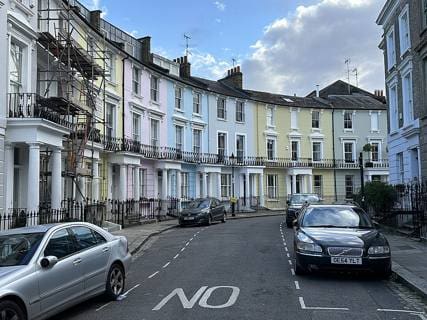
Its yellow house played 32 Windsor Gardens, home of the Brown family and Paddington Bear, in the Paddington films.
Read the full story
The house
A curved terrace of brightly painted Victorian houses in Primrose Hill, north London.
The full story
Chalcot Crescent was already one of London's most photographed streets before the films. Paddington brought a new wave of family visitors.
When Airbnb announced its competition, residents told the press they were tired of the street being a tourist attraction. It is the clearest British example on this map of the tension between a film's marketing and the people who actually live in its locations.
Where it stands now
The house has been on the market at £3.25 million. In 2024 Airbnb offered three families a free stay there to promote Paddington in Peru, and neighbours wrote to complain that their street was being 'pimped for profit'.
Trinity Street, Barry, Vale of Glamorgan, Wales, UK
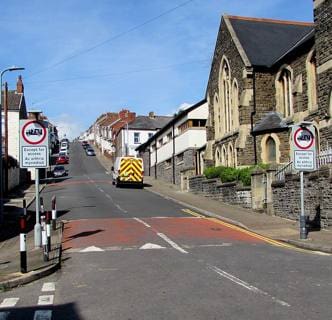
Uncle Bryn's house in Gavin & Stacey (2007–24)
Bought by fans, now an Airbnb
It was home to Stacey's family and Uncle Bryn in Gavin & Stacey. The final episode, on Christmas Day 2024, drew more than 19 million viewers, the biggest audience for a UK scripted show since records began.
Read the full story
The house
A hilly street of Victorian terraced houses in Barry, near Cardiff.
The full story
Barry has been revived as a tourist destination by the show, with fans walking up Trinity Street every day.
Both buyers on Trinity Street were fans. One couple paid extra to keep Doris's furniture, curtains and wallpaper from the show.
It is the British version of the Goonies story: modest homes, sold at close to normal prices, to the buyers who cared most.
Where it stands now
Uncle Bryn's three-bedroom house was listed at £210,000 in February 2026; the agent said they nudged the price up slightly, but kept it realistic. It was bought by fans who turned it into a holiday let from £482 for two nights. Doris's house opposite had already sold to another fan couple for just over £220,000.
The Channel 4 soap Brookside (1982 to 2003) was filmed in real houses rather than on a set, with the production company owning the whole close. At its peak it drew audiences of millions.
Read the full story
The house
A purpose-built cul-de-sac of 13 homes in West Derby, Liverpool.
The full story
Owning the houses gave the producers total control. It also meant that when filming ended, a whole street came onto the market at once.
At £735,000 for 13 homes, the close sold for less than many single houses on this map. The famous name did nothing to protect its value once the cameras had gone.
Today the houses are ordinary rental homes on one of Britain's best-known streets.
Where it stands now
After the show ended, a developer bought the close and went into administration. In December 2008 the entire close sold at auction to an anonymous buyer for £735,000. The houses were then refurbished and let, at £425 to £750 a month.
Nora Batty's house in Last of the Summer Wine (1973–2010)
Ten years to sell a TV legend
It was the home of Nora Batty in Last of the Summer Wine, the world's longest-running sitcom (1973 to 2010). Fans still come from as far as New Zealand and Canada, and in summer more than 100 people can queue outside.
Read the full story
The house
A two-bedroom stone terraced cottage on Huddersfield Road in Holmfirth, West Yorkshire.
The full story
The owner originally planned to knock it through into his design studio next door. The BBC suggested letting fans stay instead, and it was soon booked solidly, at £270 to £660 a week.
Selling proved much harder. The buyer had to be someone willing to keep it as the Nora Batty cottage, which narrowed the market sharply.
Next door, the building used as Compo's house now holds a tea room and a small museum, both of which have also been put up for sale. Holmfirth shows how a TV legacy can become a small local economy, and how hard it is to sell.
Where it stands now
A local businessman bought it for £80,000 in 2004 and, on the BBC's advice, turned it into a holiday let opened by the actress Kathy Staff. It was first put up for sale in 2006 and took more than ten years to sell, with a guide price of £169,950, to buyers who kept it as a holiday let.
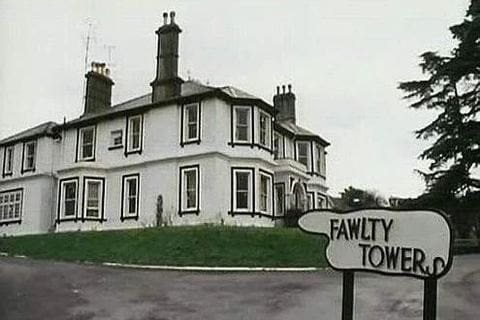
Its exterior was used as the hotel in Fawlty Towers (1975 and 1979), one of the most celebrated British sitcoms.
Read the full story
The house
A country house hotel at Wooburn Green in Buckinghamshire, known as Wooburn Grange.
The full story
Only the exterior was filmed on location; the interiors were shot in a studio.
Despite the show's fame, there was no attempt to preserve the building. It is a reminder that screen fame is no protection against fire, developers or time.
Where it stands now
The building was later destroyed by fire. Developers bought the site, and eight houses now stand where Basil Fawlty's hotel once did.
Cameron's house in Ferris Bueller's Day Off (1986)
Five years and $1.2m off
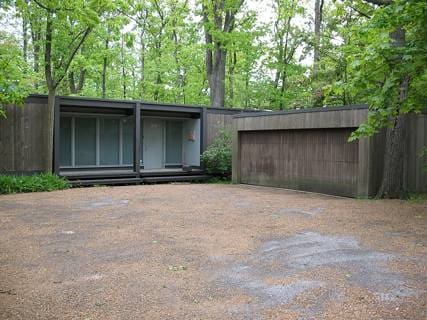
In Ferris Bueller's Day Off (1986) it was Cameron's house, where a prized 1961 Ferrari crashes through the pavilion's glass wall into the ravine.
Read the full story
The house
A modernist glass-and-steel house built in 1953 on the edge of a wooded ravine in Highland Park, north of Chicago, with a glass pavilion added in the 1970s.
The full story
The house was designed by A. James Speyer, a student of Mies van der Rohe, and is admired by architects as well as film fans.
Neither the film nor the architecture could rescue the price. A specialist modernist house in a market of traditional family homes took five years to find a buyer.
The agents eventually took it off the market and relaunched it, playing down the film and stressing the architecture. That is what finally sold it. It is the clearest example on this map that fame can bring viewers without bringing buyers.
Where it stands now
After the owners died, their sons listed it in 2009 at $2.3 million. Price cuts to $1.65 million and $1.5 million followed, and it finally sold in 2014 for $1.06 million, five years after first going on sale.
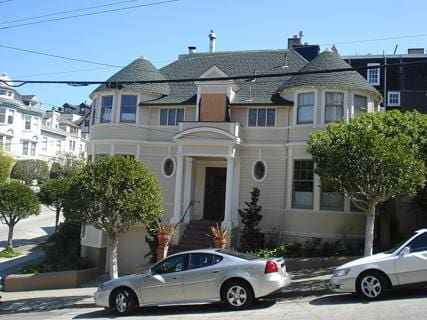
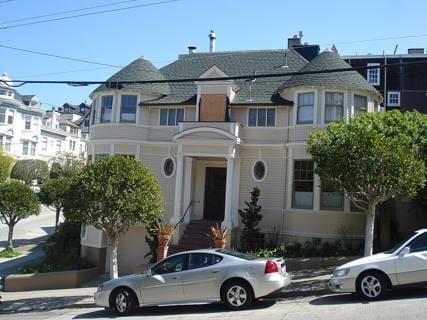
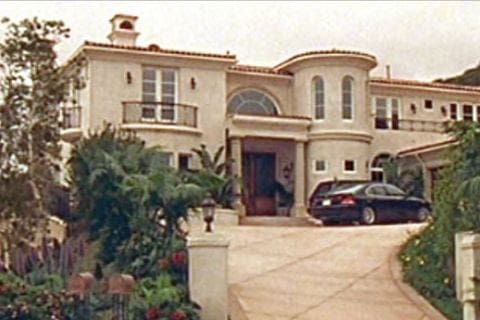
It was the Hillard family home in Mrs Doubtfire (1993), starring Robin Williams. After Williams' death in 2014, fans turned its steps into a memorial of flowers and candles.
Read the full story
The house
A four-bedroom Victorian house on Steiner Street in San Francisco's Pacific Heights.
The full story
The house is in one of San Francisco's most expensive neighbourhoods, and much of the rise reflects that market rather than the film.
The memorial in 2014 showed how strongly people connect a house with the person they saw in it. The sale two years later was quick and close to asking.
Where it stands now
The owner had bought it in 1997 for about $1.4 million. Listed in 2016 at $4.45 million, it sold for $4.15 million.
The Potters' house in Harry Potter and the Deathly Hallows Part 1 (2010)
No buyer, so it became an Airbnb
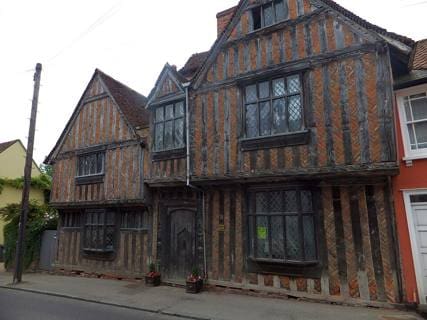
It appears in Harry Potter and the Deathly Hallows Part 1 as the Potters' house in Godric's Hollow, where Harry was born. Its carved front door has been called one of the most photographed doorways in Britain.
Read the full story
The house
A Grade I listed medieval timber-framed house in the Suffolk wool town of Lavenham, once owned by the de Vere family, Earls of Oxford.
The full story
The house dates from the 14th and 15th centuries and was a hunting lodge for the de Vere family, among the richest in medieval England.
The film crew edited shots of the outside of the house and the village to create Godric's Hollow; the actors never filmed there.
When the sale stalled, interest in holiday stays grew. Like Nora Batty's cottage, it shows that a famous house can be easier to rent than to sell.
Where it stands now
Listed in 2017 at £995,000 and later cut to £950,000, it failed to find a buyer. In 2020 the owners took it off the market and focused on letting it to visitors instead.
The Clampett mansion in The Beverly Hillbillies (1962–71)
California's record sale
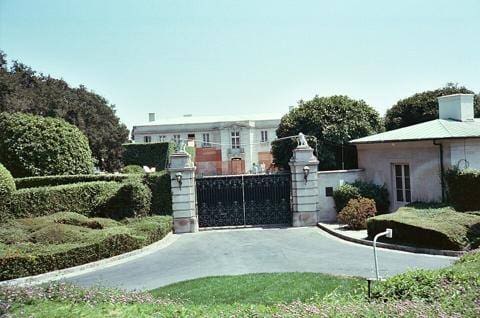
Its exterior appeared in the opening credits of The Beverly Hillbillies (1962 to 1971) as the Clampett family home. The series itself was filmed in a studio.
Read the full story
The house
A French neoclassical mansion of about 25,000 square feet on ten acres in Bel Air, Los Angeles, built in 1933 and known as Chartwell.
The full story
Perenchio expanded the estate over three decades, adding neighbouring parcels including the former home of Ronald and Nancy Reagan.
The buyer was reported to be Lachlan Murdoch. The sale beat the previous California record of $119.75 million set earlier that year.
The fame here is incidental. At this level of the market, buyers pay for land, privacy and scale, and the Clampetts are a footnote.
Where it stands now
The media executive Jerry Perenchio bought it for nearly $14 million in 1986. After his death it was listed in 2017 for $350 million, then cut to $245 million and $195 million. In 2019 it sold for about $150 million, the most expensive home sale in California history.
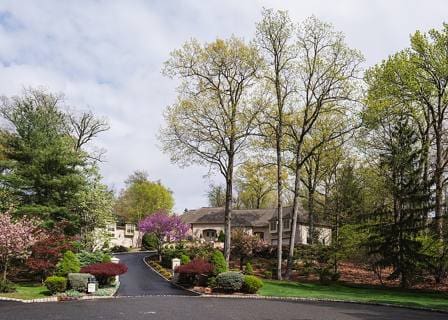
It was Tony Soprano's home in The Sopranos (1999 to 2007), chosen from around 150 houses. The pilot was filmed inside, and the crew returned to film the exterior throughout the series. Fans still photograph the driveway where Tony collected the morning paper.
Read the full story
The house
A four-bedroom house on a 1.5-acre plot in North Caldwell, New Jersey, with a long sweeping driveway and a guest house.
The full story
Interior scenes after the pilot were filmed on a replica set in a New York studio, modelled on the house's real layout.
The owners argued it was impossible to quantify the house's 'intrinsic value'. Their price was a test of how much a buyer would pay for the story.
Where it stands now
The owners, who had lived there for 32 years, listed it themselves in 2019 at a 'starting price' of $3.4 million, against $1 million to $2 million for comparable homes nearby.
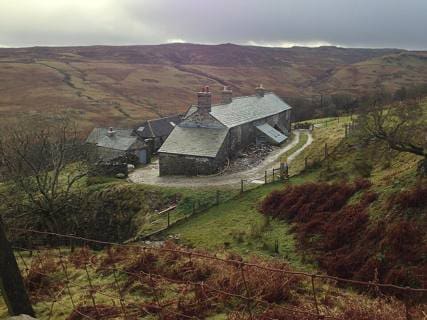
It was Crow Crag, Uncle Monty's cottage, in the cult film Withnail and I (1987). It was already derelict when the film was made.
Read the full story
The house
A remote stone farmhouse at the head of the Wet Sleddale valley near Shap, Cumbria, almost two miles from the nearest public road.
The full story
Rumours that Kate Moss and other celebrities were interested helped pack the auction room. One fan shouted out before bidding began, asking the buyer to look after the house.
The water company said it had never sold a building that generated so much interest.
A derelict farmhouse without a proper road sold for nearly twice its guide. It is one of the clearest British examples of fame adding value, because the fans were the buyers.
Where it stands now
Its owner, United Utilities, put it up for auction in 2009 with a £145,000 guide. Bidding reached £265,000, but the winning bidder could not raise the funds. It was then sold to the under-bidder, an architect and fan of the film, who is restoring it as a home.
The Banks mansion in The Fresh Prince of Bel-Air (1990–96)
On the market for the first time in 48 years
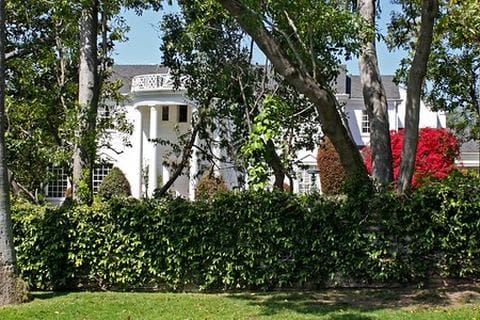
Its exterior was the Banks family mansion in The Fresh Prince of Bel-Air (1990 to 1996), the show that made Will Smith a star. The interiors were filmed on a studio set.
Read the full story
The house
A Georgian Colonial mansion built in 1937 on a corner plot in Brentwood, Los Angeles. Despite the show's title, it is not in Bel Air.
The full story
The owners say they had no idea how big the show would become when the producers knocked in 1990.
The 2026 price cut is the most recent test on this map of what television fame is worth at the very top of the market. The early signs suggest the answer is: less than sellers hope.
Where it stands now
The same family has owned it since 1978. In 2020 Will Smith hosted Airbnb stays there at $30 a night for the show's 30th anniversary. In January 2026 it was listed for the first time in 48 years at nearly $30 million, and in September 2026 it returned to the market at $22.95 million.
Dick and Angel's château in Escape to the Chateau (Channel 4)
A 45-room château for £280,000
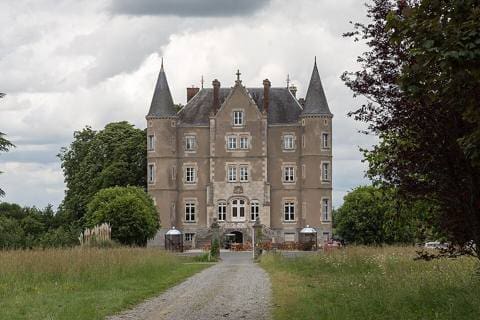
It became famous through the Channel 4 series Escape to the Chateau, which followed a British couple restoring it from 2016. When they found it, it had stood empty for about 40 years with no electricity, heating or running water.
Read the full story
The house
A 19th-century château with 45 rooms, 78 windows, a moat and 12 acres in the Mayenne countryside of north-west France.
The full story
The couple searched France for years before finding the château. Their first months, filmed for the series, involved bats, broken windows and camping in their own home.
The television series turned the château into a brand. Weddings there and luxury stays have been priced in the thousands of pounds.
It is the reverse of most homes on this map: a house that was cheap because no one wanted it, made valuable by the screen rather than the other way round.
Where it stands now
They bought it in 2015 for £280,000, leaving them roughly £20,000 for repairs. It is now their family home and a business, with weddings and holiday stays.
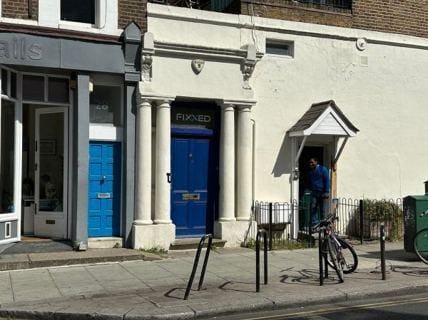
In Notting Hill (1999) the blue door was the entrance to Will Thacker's flat, the home of Hugh Grant's character. It was the real home of the film's writer, Richard Curtis. The interiors were filmed on a set.
Read the full story
The house
A three-bedroom townhouse behind a bright blue front door on Westbourne Park Road in Notting Hill, converted from a former chapel.
The full story
The door became one of the most photographed front doors in London and a fixed stop on Notting Hill film tours.
Owners have swung between hiding the fame and selling it: first a black door to deter visitors, then the blue restored, and now a listing that leads on the film.
Notting Hill prices have soared since 1999 regardless, so how much of the value is the film and how much is the postcode is hard to separate.
Where it stands now
Curtis sold it soon after the film came out, for about £1.3 million. As tourists kept coming, the original door was auctioned for charity for £5,750 and the new one painted black, though it was later painted blue again. Bought for £4.5 million in 2014, the house went on the market at £7.95 million in September 2026.
Pin Oak Court, Vermont South, Melbourne, Australia
Ramsay Street in Neighbours (from 1985)
Street records and a superfan landlord
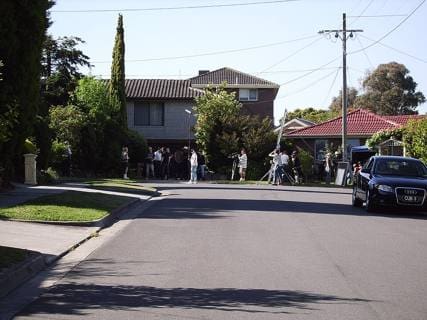
It has been Ramsay Street, Erinsborough, in Neighbours since 1985. The owners are paid a fee by the producers for the regular filming and the daily visits from tourists.
Read the full story
The house
A cul-de-sac of brick family homes in Vermont South, in Melbourne's eastern suburbs.
The full story
The 2021 sale beat the top of the price guide by A$170,000. The buyer arrived on the day, had never seen the house, and waited for it to go on the market before bidding.
Ramsay Street is one of the few places where screen fame seems to have produced a genuine premium. Two things help: owners are paid by the production, and a fan with deep pockets has kept buying.
It is a useful counterweight to Brookside Close, where a whole UK soap street went for less than one Ramsay Street house.
Where it stands now
In 2013 a UK-based fan who already owned No. 6 paid A$867,000 for No. 3, against an estimate of A$680,000. In 2021 No. 1, bought for A$235,000 in 1991, sold at auction for a street record of A$1.6 million.
The numbers
No. 3 sold
A$867,000 (2013), against an estimate of A$680,000
Tom and Barbara Good's house in The Good Life (1975–78)
Sold for what the street sells for
It was Tom and Barbara Good's self-sufficient home in the BBC sitcom The Good Life (1975 to 1978). The show was set in Surbiton, but every exterior scene, from the vegetable plots to the pig pen, was filmed here.
Read the full story
The house
An Edwardian detached house on Kewferry Road in Northwood, north-west London, with the Leadbetters' house next door.
The full story
The producers searched widely for a matching pair of suburban houses before settling on Kewferry Road.
In one episode Tom hoped the house might be worth £100,000 one day. The 2026 sale price is more than 14 times that.
It fits the pattern on this map: on an ordinary suburban street, even a much-loved sitcom home sells for what the street sells for.
Where it stands now
The house was on the market in 2001 at £570,000. Land Registry records show it sold in April 2026 for £1.44 million, in line with other detached houses on the same road.
The Bridgerton family home in Bridgerton (from 2020)
Fans head for the Bridgerton front door
Its exterior plays Bridgerton House, the Mayfair home of the Bridgerton family, in Netflix's Bridgerton (from 2020). The show moves it to a digitally created Grosvenor Square, and the wisteria around the door is added by the production team.
Read the full story
The house
A red-brick Georgian villa on the edge of Greenwich Park in south-east London, once the official home of the Ranger of Greenwich Park.
The full story
Like the National Trust homes on this map, its fame is measured in visitors rather than a sale price. It is not for sale.
Fans hoping for the on-screen wisteria may be disappointed: it is taken down when filming ends.
Its real view is across Blackheath, not a Mayfair square.
Where it stands now
It has been in English Heritage's care since 1986 and houses the Wernher art collection. When the second series aired, visits to the house's website rose 81%.
The Banks family home in Father of the Bride (1991)
Sold at exactly the asking price
Father of the Bride (1991) used the Alhambra house for the backyard wedding and the father-daughter basketball game, and the Pasadena house for the front of the Banks family home.
Read the full story
The house
A 1920s colonial house on a half-acre plot in Alhambra, near Los Angeles, and a near-identical house in Pasadena.
The full story
The Pasadena owners say that when they bought their house in 1999, their agent advised offering below asking because the film fame had inflated the price.
On a summer day they can get several groups of fans photographing the front. They say they have no plans to sell.
Fame here brought visitors and a quick sale, but no premium.
Where it stands now
The Alhambra house was listed in 2016 for $1.998 million and sold quickly at the asking price.
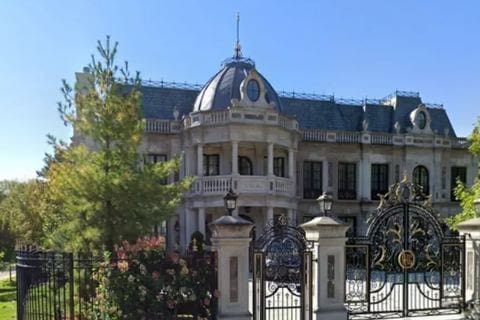
It was Regina George's home in Mean Girls (2004), including the kitchen and the bedroom where the Burn Book is revealed.
Read the full story
The house
A 20,000-square-foot stone mansion on two acres in The Bridle Path, Toronto's most exclusive neighbourhood.
The full story
The house has also hosted a Martha Stewart cooking show and a William Shatner commercial.
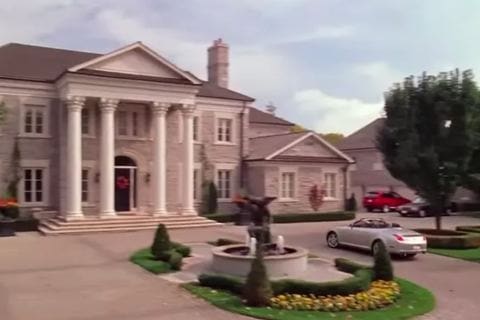
At the top of the market, the film connection has not helped. The price has been cut by a quarter, and the headlines have been about a house that 'just won't sell'.
Where it stands now
Listed in 2015 at C$14.8 million, it was back on the market in 2022 at C$27 million and still unsold after months. The price was then cut to C$23.8 million and later C$19.995 million.
Erica Barry's beach house in Something's Gotta Give (2003)
A $41m beach house
It was the exterior of Diane Keaton's beach house in Something's Gotta Give (2003). The interiors, much copied by fans, were filmed on a set in Los Angeles.
Read the full story
The house
A shingle-style beach house on Meadow Lane in Southampton, one of the most expensive roads in the Hamptons.
The full story
The film inspired a whole style of coastal interiors, and fans have built houses modelled on it.
At $41 million, the price reflects the oceanfront land on Meadow Lane, not the film. The famous interiors never existed inside the real house.
It was the setting for The Big Chill (1983), where old college friends reunite, and for The Great Santini (1979).
Read the full story
The house
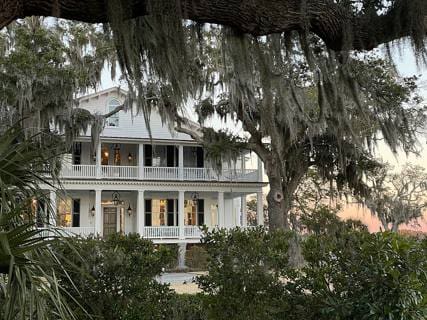
A mansion called Tidalholm, built in 1853 on the Beaufort River in South Carolina.
The full story
The house had been a summer home for a plantation owner, a Union hospital in the Civil War, and later a guest house.
Two famous films and a riverfront position were not enough. It is one of the clearest losses on this map.
Where it stands now
Listed in 2013 at $4.5 million, it was cut to $2.9 million in 2015, then taken back by the mortgage lender. In 2017 it sold for $1.76 million, less than 40% of its original asking price.
In Groundhog Day (1993), it is the house where Bill Murray's character takes piano lessons as he relives the same day.
Read the full story
The house
An 1893 house in Woodstock, Illinois, the town that stood in for Punxsutawney in Groundhog Day.
The full story
Woodstock holds its own Groundhog Day festival each year, and tour groups gather outside.
The owners kept the front door, mailbox and piano room as they appear in the film. The fame drove attention, but the price was set by the local market.
Where it stands now
After 19 years there, its owners listed it in 2019 for $249,000. Within 72 hours it had 1,500 online views and four viewings.
The Corleone family compound in The Godfather (1972)
Paid for with a new roof, sold at a big discount
They formed the Corleone family compound in The Godfather (1972). The garden of No. 110 hosted Connie's wedding, and No. 120 was used as Michael Corleone's house.
Read the full story
The house
A cluster of Tudor-style houses on Longfellow Avenue in the Emerson Hill and Todt Hill area of Staten Island.
The full story
The house at No. 110 was built in 1930 for a future Staten Island borough president. Producers chose it on the advice of a local actor in the film.
The 2012 sale was more than $1 million below the original asking price, despite one of the most famous films ever made being shot there.
The new owners then tried to sell the fantasy, recreating Don Corleone's office indoors, although the interior was never filmed.
Where it stands now
The family who owned No. 110 let Paramount film there in exchange for a new roof. After the owner's death it was listed in 2010 at $2.9 million and sold in 2012 for $1.7 million. The new owners remodelled an office to look like Don Corleone's and relisted it in 2014 at $2.89 million. Next door, No. 120, bought for $195,000 in 1977, was listed in 2019 at $1.37 million.
The girls' Miami house in The Golden Girls (1985–92)
$1m over asking after a bidding war
Its exterior was used for the house the four women share in Miami in The Golden Girls (1985 to 1992). Location scouts chose it because its tropical planting looked like Florida.
Read the full story
The house
A mid-century four-bedroom house built in 1955 in Brentwood, Los Angeles.
The full story
The founders' son said fans still knocked on the door; one man asked to propose to his girlfriend on the driveway.
The buyers said they were not particularly fans of the show. They were drawn by the preserved mid-century design and the location.
It is the biggest premium over asking on this map. Even here, the buyers said they were paying for the house, not the sitcom.
Where it stands now
When the builders' family put it on the market for the first time in 2020 at $2,999,000, it drew 20 offers and a bidding war between nine buyers. It sold for $4,000,260, more than $1 million over asking.
Buffalo Bill's house in The Silence of the Lambs (1991)
Visitors, but no buyers
It was the home of the killer Buffalo Bill in The Silence of the Lambs (1991). Two rooms were used in the film; the notorious basement pit was a set.
Read the full story
The house
A three-storey Victorian house in the small town of Layton, about an hour from Pittsburgh, Pennsylvania.
The full story
A Realtor.com editor said at the time that notoriety does not add up to a quick sale, and location still matters.
It is the horror-film version of the Ferris Bueller house: plenty of curious visitors, very few buyers.
Where it stands now
The couple who had owned it since the 1970s, and married in its foyer, listed it at $300,000. With visitors but no serious bidders, they cut the price to $250,000.
Hyacinth Bucket's bungalow in Keeping Up Appearances (1990–95)
Never sold: the same owner for 45 years
It was the home of Hyacinth Bucket, pronounced 'Bouquet', in Keeping Up Appearances (1990 to 1995), one of the BBC's most-sold comedies overseas, bought by broadcasters close to 1,000 times. The bungalow next door was her neighbour Elizabeth's.
Read the full story
The house
A detached bungalow on Heather Road in the village of Binley Woods, on the edge of Coventry.
The full story
Daisy and Onslow's house, in the same series, was a council house in the Stoke Aldermoor area of Coventry.
A similar bungalow on the same road was listed in 2024 at £550,000, which suggests the local market, not the show, sets prices here.
It is a reminder that many screen homes never test the market at all: the owners simply stay.
Where it stands now
It has never been sold. The owners agreed to filming before the show began, and the same household has lived there for more than 45 years. Fans still come to photograph it.
It is the Dutton family ranch in Yellowstone, one of the most watched series in America.
Read the full story
The house
A working cattle ranch of about 2,500 acres near Darby in Montana's Bitterroot Valley, with a log lodge built in 1917.
The full story
The ranch takes its name from Chief Joseph of the Nez Perce, who led his people across the land in 1877.
The Four Sixes ranch in Texas, also featured in the Yellowstone universe, sold in 2022 for more than $192 million, the first time it had come up in 150 years.
Here, the fame earns money every night rather than once at sale.
Where it stands now
The current owners bought it in 2012, six years before the show began. It is not for sale. Instead, fans can stay in cabins from the show, at around $1,400 to $1,700 a night.
Coronation Street, the world's longest-running TV soap, was filmed there from 1960 until the move to MediaCity in Salford.
Read the full story
The house
The old Granada Studios complex on Quay Street in Manchester, including the outdoor Coronation Street set used for decades.
The full story
The site had potential for more than three million square feet of development, which is what the buyers were paying for.
The most famous street in British television was, in property terms, a development site.
Where it stands now
ITV sold the 13.5-acre site for £26.5 million to a joint venture between Manchester City Council and the developer Allied London, which planned a new mixed-use quarter. Two earlier sale attempts had collapsed.
It has been the heart of EastEnders since 1985. The original set, built in 1984 from steel, plywood and plaster brick panels, was meant to last two years.
Read the full story
The house
The outdoor Albert Square set at the BBC's Elstree Studios in Borehamwood, Hertfordshire, with its Victorian terraces and the Queen Vic.
The full story
The National Audit Office criticised the overspend; £44,000 was spent on sample bricks alone.
Albert Square was modelled on Fassett Square in Hackney, where real Victorian houses now sell for well over £1 million.
It may be the most expensive 'street' on this map, and it was paid for out of the licence fee.
Where it stands now
The BBC rebuilt the square for high-definition filming at a cost of about £87 million, £27 million over budget and four years late. In 2024 it sold the Elstree site to an investment firm, keeping the set on a long-term lease.
Henry River Mill Village, near Hildebran, North Carolina, USA
District 12 in The Hunger Games (2012)
A whole film town for $1.4m
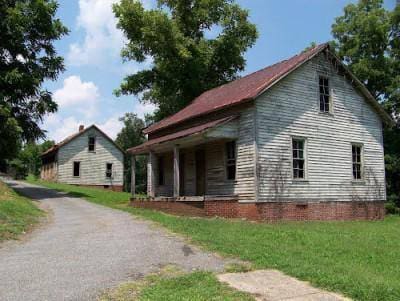
It was District 12, Katniss Everdeen's home, in The Hunger Games (2012). The old company store became the Mellark family bakery.
Read the full story
The house
A deserted cotton-mill village of more than 20 buildings on 72 acres near Hildebran, North Carolina.
The full story
The mill burned down in 1977 and the last resident left in 1987. The owner gave the film crew one building to blow up.
North Carolina's tourism board quickly added the village to a Hunger Games itinerary, and local police worked with private security to keep fans out.
Even a whole film town sold for less than many single houses on this map.
Where it stands now
The owner, who had bought the village in 1975 and had never read the books or seen the film, listed it for $1.4 million in 2012 after being 'bombarded' by thousands of visitors.
The vets' surgery in All Creatures Great and Small (1978–90)
From care home to Herriot holiday flats
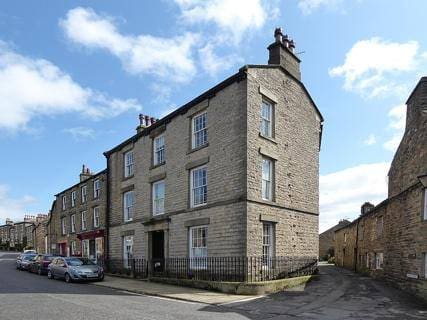
As Cringley House it played Skeldale House, the vets' surgery, in the BBC's All Creatures Great and Small (1978 to 1990). Its owners at the time were given roles as extras.
Read the full story
The house
A Grade II listed three-storey stone house on the main street of Askrigg in Wensleydale, North Yorkshire.
The full story
The new owners decorated every apartment with a Herriot theme, including a suite named after Tricky Woo, Mrs Pumphrey's spoilt Pekingese.
The 2020 remake used Grassington instead of Askrigg, which spread the tourist trail across two Dales villages.
Like Nora Batty's cottage and Uncle Bryn's house, this Yorkshire screen home earns more from visitors than it ever did as a family house.
Where it stands now
It later became a home for vulnerable adults run by a housing association. A couple bought it in 2013, renamed it Skeldale House and ran it as a B&B. It came up for sale again in 2020 and is now seven luxury holiday apartments with an All Creatures theme, run by a couple from Pontefract.
Esholt, near Leeds and Bradford, West Yorkshire, UK
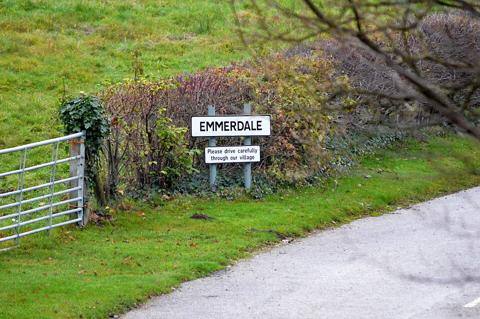
The Woolpack in Emmerdale Farm (from 1976)
Renamed for the soap, sold to a pub chain
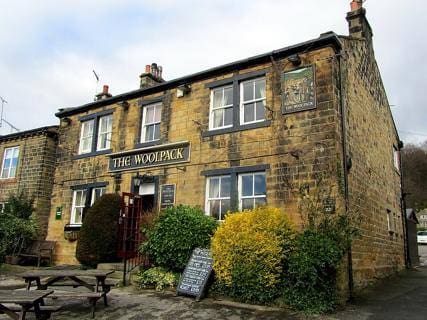
Originally the Commercial Inn, it was the Woolpack in Emmerdale Farm from 1976 until the soap moved to a purpose-built set on the Harewood estate in the late 1990s. It changed its name permanently because of the show.
Read the full story
The house
A stone-built village pub dating from 1830 on the main street of Esholt, between Leeds and Bradford.
The full story
The agent selling it said you could never buy the Rovers Return or the Queen Vic, but you could buy the Woolpack.
For the 40th anniversary of its first appearance in 2016, the pub sold beer at 35p a pint, its 1976 price, for charity.
It is one of the few screen homes in West Yorkshire with a recorded sale, and the price was set by its trade as a pub, not by its fame.
Where it stands now
In the mid-2000s, after its tenant left, the freehold was offered at around £600,000 and bought by a national pub company. Fans from as far away as Finland, Japan and New Zealand still visit.
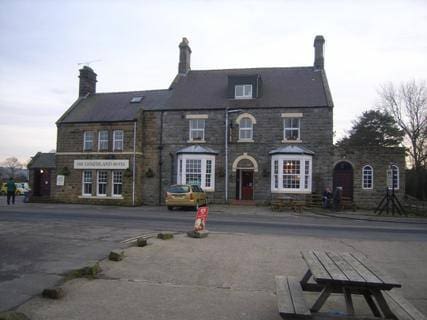
It was the Aidensfield Arms in ITV's Heartbeat (1992 to 2010), set in 1960s Yorkshire. Most of the pub's interior scenes were filmed there, and many features seen on screen survive.
Read the full story
The house
A stone hotel and pub in the village of Goathland on the North York Moors, near Whitby.
The full story
The village still draws Heartbeat fans from around the world, helped by the steam railway that stops there, which also appeared in Harry Potter.
Reports at the time pointed out that £175,000 would buy only a small flat in London or Manchester. Fame here had not inflated the price at all.
Where it stands now
After 40 years with the same family, the business was put up for sale in 2023 for £175,000, for the lease, goodwill and fittings, with rent of £32,000 a year.
The Perlman family villa in Call Me By Your Name (2017)
Still the same price four years later
It was the Perlman family home in Call Me By Your Name (2017). The director, Luca Guadagnino, said he had known the house for years and once dreamed of buying it himself.
Read the full story
The house
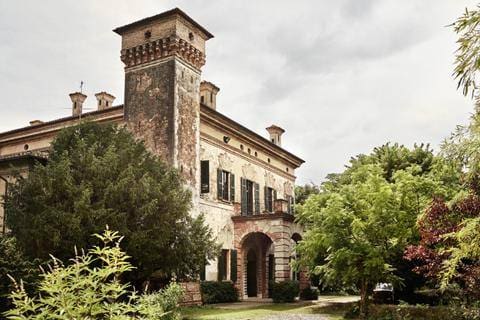
A 16th-century villa of around 15,000 square feet, built on the ruins of an earlier castle near the Adda river in Lombardy, an hour from Milan.
The full story
The villa has 14 rooms with frescoes and coffered ceilings, two annexes and a large park, but needs restoration.
Despite global attention, the film did not produce a quick sale. Fame drew headlines, not buyers.
Where it stands now
It went on the market in 2018 at €1.7 million, timed to the film's Oscar run. In 2022 it was being reported as for sale at the same price.
Doc Martin's home and surgery in Doc Martin (2004–22)
Guide price cut before the finale
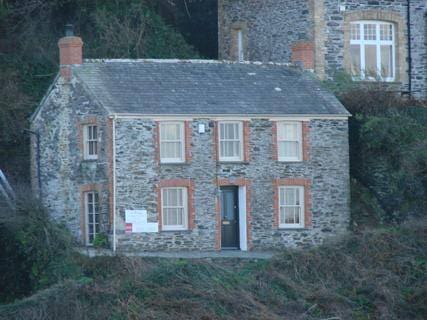
It was Dr Martin Ellingham's home and surgery in ITV's Doc Martin (2004 to 2022), set in the fictional village of Portwenn.
Read the full story
The house
A Grade II listed two-bedroom fisherman's cottage on the hillside above the harbour in Port Isaac, north Cornwall.
The full story
Port Isaac is crowded with Doc Martin fans on tours, and the buyer would inherit the queue at the door.
The price reflected harbour views in one of Cornwall's most expensive villages. Even so, it had to be cut.
Where it stands now
When not used for filming it was a holiday let at more than £200 a night. Before the final series in 2022 it was listed at a £1.25 million guide price, later reduced to £1.15 million, with forward bookings included.
The Potts family windmill in Chitty Chitty Bang Bang (1968)
£9m, the first sale in 35 years
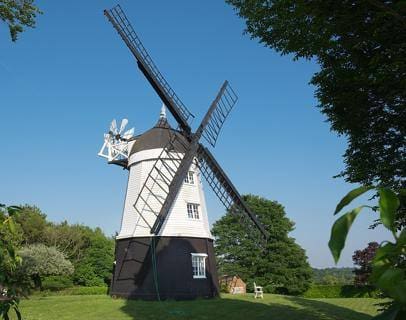
It was the home of the inventor Caractacus Potts in Chitty Chitty Bang Bang (1968). The producers cosmetically restored it for filming.
Read the full story
The house
A Grade II listed windmill built around 1816 on a hilltop at Ibstone in the Chiltern Hills, with a brick and flint house and almost 37 acres.
The full story
The windmill overlooks Turville, the village used for The Vicar of Dibley.
At £9 million, the price is for 37 acres in the Chilterns with planning permission to nearly double the house. The windmill's film fame is the headline, not the valuation.
Where it stands now
After the film, the actress Hayley Mills and her husband bought it at auction in 1971. It later belonged to Sir David Brown of Aston Martin, who sold it in 1988. In 2023 it came up for sale for the first time in 35 years at a £9 million guide price.
It was the stately home in Saltburn (2023). The director chose it because it had never been filmed or even widely photographed before.
Read the full story
The house
A Grade I listed mansion of more than 120 rooms, built around 1328, on a 200-acre estate near Lowick in Northamptonshire.
The full story
The owner said a generous fee persuaded him to allow filming. 'These houses don't run on water,' he told a newspaper.
Contracts meant no one involved could reveal the location, but a magazine identified the house from the trailer before the premiere.
Saltburn shows the newest way screen fame affects a house: not through its price, but through social media crowds at the gate.
Where it stands now
It has never been sold and has belonged to the same family since the 1700s. After the film, fans recreated its final dance scene in front of the house, and the owner said more than 50 people had strayed off a public footpath to trespass.
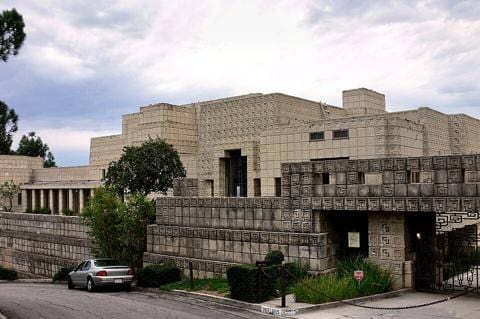
It was Rick Deckard's apartment in Blade Runner (1982) and appeared in House on Haunted Hill (1959), among many other films.
Read the full story
The house
A Mayan Revival house built in 1924 from thousands of patterned concrete blocks, designed by Frank Lloyd Wright, on a hilltop in Los Feliz, Los Angeles.
The full story
A condition of the 2011 sale required the house to be open to the public for 12 days a year, a rule that binds every future owner.
The restoration replaced nearly 4,000 of the house's concrete blocks.
The record price reflected Wright, not Blade Runner. The film fame did not help in 2009, when it could not find a buyer at any reasonable price.
Where it stands now
Badly damaged in the 1994 earthquake, it was listed in 2009 at $15 million, found no buyer in the downturn and sold in 2011 for about $4.5 million to a billionaire who restored it. Listed at $23 million in 2018, it sold in 2019 for $18 million, then a record for a Wright house.
Catherine Tramell's house in Basic Instinct (1992), then Celeste's in Big Little Lies (2017)
Two famous roles, three asking prices
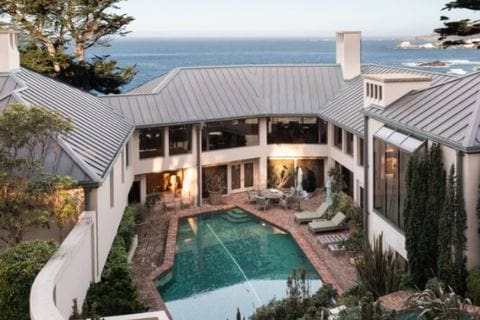
It was Catherine Tramell's house in Basic Instinct (1992), and 25 years later Celeste's house in HBO's Big Little Lies (2017). The adventurer Steve Fossett once owned it.
Read the full story
The house
A glass-walled contemporary clifftop house of about 12,000 square feet in Carmel Highlands, on California's Big Sur coast.
The full story
Between listings it was let as a holiday rental at around $6,000 a week.
Two famous screen roles have not settled its price. Three very different asking prices in four years suggest the market is still deciding what an ocean-view house is worth, film or no film.
Where it stands now
It was listed in 2018 at $16.9 million, in 2019 as part of a five-property compound at $52.3 million, and in 2022 on its own at $29.6 million after a costly renovation.
Its exterior was the Conner family home in Roseanne and The Conners. The show's creator grew up in Evansville; the series itself was filmed in Los Angeles.
Read the full story
The house
A 1920s four-bedroom house near the University of Evansville in Indiana.
The full story
Inside, the house looks nothing like the sitcom set, which disappoints some fans.
Roseanne was one of America's most watched shows. Its house has always sold for the price of an ordinary Evansville home.
Where it stands now
It sold for $55,000 in 2004. In 2015 Roseanne Barr said she would buy it. In 2024 it was listed at $225,000, sold as is.
It was the Palmer family home in the pilot of Twin Peaks (1990) and the film Fire Walk With Me (1992), complete with Laura Palmer's wicker rocking chair.
Read the full story
The house
A house on 33rd Street in Everett, Washington.
The full story
It looked almost unchanged 25 years after filming. The price was in line with Everett homes of its size.
The Cunningham family home in Happy Days (1974–84)
Last sold for $422,000 in 1995
Its exterior was the Cunningham family home in Happy Days (1974 to 1984), supposedly in 1950s Milwaukee.
Read the full story
The house
A six-bedroom 1920s house in the Mid-Wilshire area of Los Angeles.
The full story
The rise shows what decades in Los Angeles do to a house, with or without the Fonz.
Where it stands now
It last sold in 1995 for $422,000. Estimates in recent years have put its value at around $3 million to $3.5 million, almost entirely because of the Los Angeles market.
The Boggs family home in Edward Scissorhands (1990)
Bought by the film's dishwasher
It was the Boggs family home, where Edward is taken in, in Tim Burton's Edward Scissorhands (1990).
Read the full story
The house
A three-bedroom house on Tinsmith Circle in a pastel-painted estate in Lutz, north of Tampa, Florida.
The full story
The previous owner, who lived there during filming, gave the new owners a square of the original kitchen wallpaper.
The 2022 asking price was a big jump, but it came with a museum's worth of props. Like the Goonies house, the fan who bought it was the buyer who valued it most.
Where it stands now
Listed at $224,000 in 2020, it drew several offers and sold for $230,000 to a man who had washed dishes for the film crew in 1990. He and his wife turned it into a free fan museum, Scissorland. In 2022 they relisted it at $699,900, memorabilia included.
The Sultenfuss home and funeral parlour in My Girl (1991)
The most-viewed listing in America, then a price cut
It was the Sultenfuss family home and funeral parlour in My Girl (1991).
Read the full story
The house
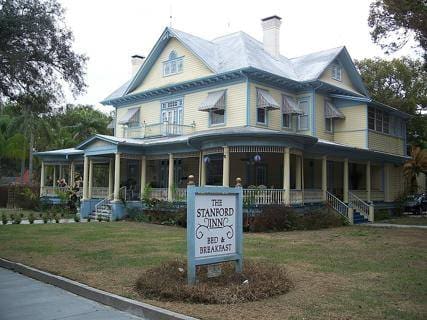
A large 1906 Victorian house with a wrap-around porch, pool and carriage houses in Bartow, Florida, once the Stanford Inn.
The full story
About half a dozen fans a week still stop to photograph the porch.
Tens of thousands of views did not translate into a premium. The later asking price was well below the first.
Where it stands now
The owner bought it in 2019 without knowing its history. Listed in 2021 at $675,000, it was the most-viewed home on Realtor.com that week and reportedly sold in October 2021. It later returned to the market at $499,400.
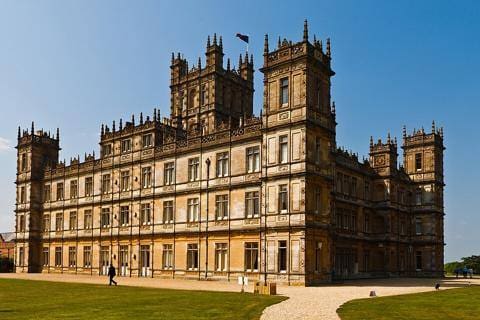
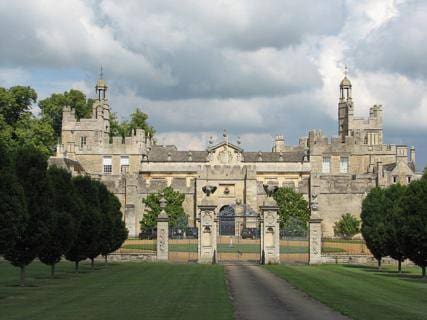
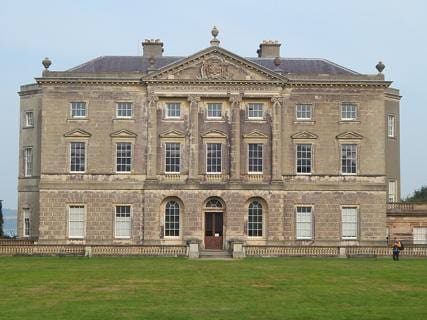
The Crawley family seat in Downton Abbey (2010–15)
The show that paid for the roof
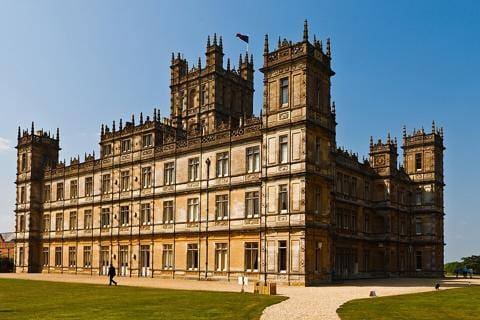
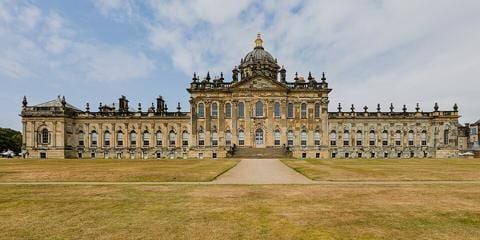
It is Downton Abbey in the ITV series (2010 to 2015) and the films that followed, shown in more than 100 countries.
Read the full story
The house
A Victorian castle by Sir Charles Barry, architect of the Houses of Parliament, set in about 6,000 acres in Hampshire and home of the Earls of Carnarvon.
The full story
Highclere is open to the public on around 70 days a year. Its owners have built a business around it, with tours, events, books and a gin brand.
This is the clearest example on this map of fame adding value to a house that was never for sale: not in its price, but in the income that kept it standing.
Where it stands now
When the producers arrived in 2009, the castle needed an estimated £12 million of repairs, £1.8 million of them urgently; parts were verging on ruin and the family lived in a cottage on the estate. Visitor income after the show's success helped pay for the work.
The numbers
Repairs needed
about £12m (2009), £1.8m urgently
Paid for by
a surge in paying visitors after Downton
Open
about 70 days a year
SourcePhoto: Richard Munckton from Windsor, Melbourne, Australia, CC BY 2.0, Wikimedia Commons
Share this story
FilmEarns from visitors
Rosings Park
Belton House, Lincolnshire, UK
Rosings Park in Pride & Prejudice (2005)
A 20% rise in visitors
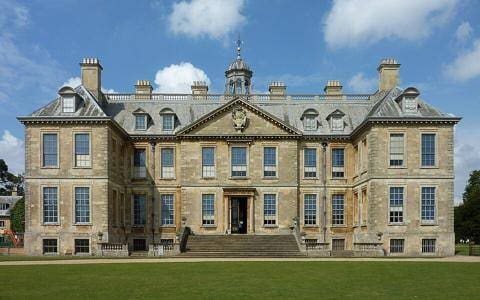
It played Rosings Park, home of Lady Catherine de Bourgh, in the 2005 film of Pride & Prejudice.
Read the full story
The house
A 17th-century country house near Grantham in Lincolnshire, owned by the National Trust.
The full story
Country houses do not change hands often, but screen tourism shows up clearly in their visitor numbers, which is how they pay their bills.
Where it stands now
Research on Austen screen tourism found visitor numbers rose by about 20% after the film.
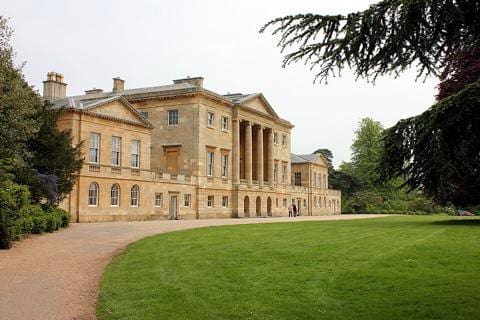
It played Netherfield Park, the Bingleys' rented house, in the 2005 Pride & Prejudice, and has appeared in other period dramas.
Read the full story
The house
An 18th-century Palladian mansion in Berkshire, owned by the National Trust.
The full story
Basildon Park was rescued from ruin in the 1950s before passing to the National Trust. Its film appearances keep bringing visitors to a house that once nearly disappeared.
Where it stands now
Research on Austen screen tourism recorded a 76% rise in coach tours to the house after the film.
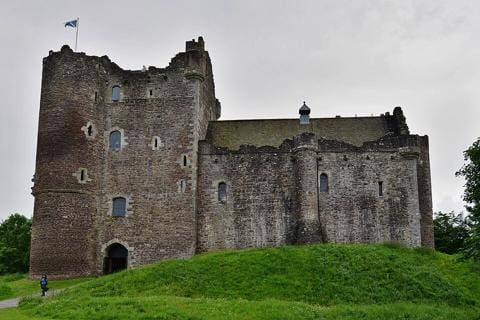
Castle Leoch in Outlander, and Camelot in Monty Python and the Holy Grail (1975)
Visitors nearly doubled in two years
It is Castle Leoch in Outlander, Camelot in Monty Python and the Holy Grail, and Winterfell in the pilot of Game of Thrones.
Read the full story
The house
A 14th-century courtyard castle near Stirling, managed by Historic Environment Scotland.
The full story
VisitScotland found Outlander had overtaken Braveheart and Harry Potter as the TV or film inspiration most mentioned by visitors, especially Americans.
Retail income at Doune rose by 62% in one year after the visitor offer was upgraded.
Where it stands now
Visitor numbers rose from 47,069 in 2014, when Outlander first aired, to 90,279 in 2016, an increase of 91.8%.
Its farmyard and old tower house were Winterfell, home of the Stark family, in Game of Thrones.
Read the full story
The house
An 18th-century mansion on 820 acres beside Strangford Lough in County Down, built half in classical and half in Gothic style because its first owners could not agree.
The full story
The estate now runs Winterfell tours, archery and themed events.
Game of Thrones has been described as doing for Northern Ireland what The Lord of the Rings did for New Zealand.
Where it stands now
The Ward family owned it until 1950; it passed to the National Trust in 1952. Staff estimated it was receiving more than 2,500 Game of Thrones fans a month, and Tourism Northern Ireland estimated one in six visitors to Northern Ireland came to see filming locations.
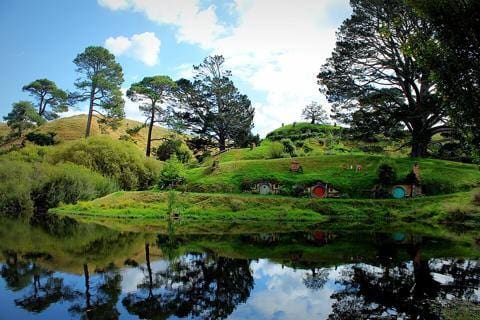
The Shire in The Lord of the Rings (2001–03) and The Hobbit (2012–14)
A sheep farm turned tourist magnet
It became the Shire, home of the hobbits, in The Lord of the Rings and The Hobbit films. A location scout for Peter Jackson knocked on the farmhouse door in 1998 while the owner was watching rugby.
Read the full story
The house
A 500-hectare sheep and beef farm near Matamata on New Zealand's North Island, owned by the Alexander family.
The full story
The farm is still worked by one of the family, alongside around 230 staff at peak for the tours.
It is perhaps the most successful screen home on this map, and it has never been for sale. Fame here earns money every day.
Where it stands now
The set was rebuilt permanently for The Hobbit and became a tourist attraction. In the year to March 2016 it had 468,000 visitors, with numbers roughly doubling each year since 2010, almost all from overseas.
It has been the home of ITV's Emmerdale since 1997, replacing the real village of Esholt, which had become so popular with visitors that filming there was impossible.
Read the full story
The house
A complete working village set of stone cottages, shops, a church and the Woolpack pub, hidden in a valley on the Harewood estate north of Leeds.
The full story
The set is screened from Harewood House by woodland and kept under security. Coaches take visitors in from the main estate.
It is the clearest Leeds example of screen fame earning money: a village that never had a resident, now charging admission.
Where it stands now
After Leeds City Council approved tours over local objections, the set opened to paying visitors on selected weekends, at £32 a ticket in 2018 and from £35 in 2024.
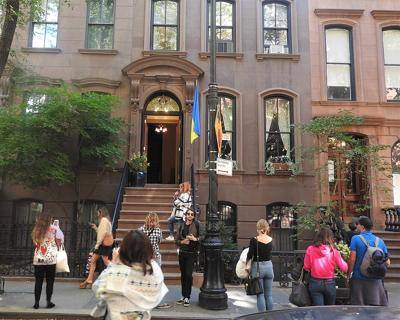
Carrie Bradshaw's stoop in Sex and the City (1998–2004)
A gate to keep the fans off
No. 64 and then No. 66 were used as the outside of Carrie Bradshaw's apartment in Sex and the City (1998 to 2004). Fans still pose on the stoop of No. 66 at all hours.
Read the full story
The house
Two neighbouring brownstones on Perry Street in Manhattan's West Village.
The full story
The owner told the commission that fans climb over the chain, dance and lie on the steps, try the front door and ring the bell late at night. Even Sarah Jessica Parker staged an unauthorised photo shoot there in 2014.
The prices next door reflect the West Village market. At No. 66, the fame has been only a cost.
Where it stands now
The owner of No. 66, there since 1978, put up a chain and a 'no trespassing' sign, and in January 2025 won approval from the city's Landmarks Preservation Commission for a gate. Next door, No. 64 sold for $9 million in 2011, $9.85 million in 2012 and $13.25 million in 2013.
Brideshead in Brideshead Revisited (1981), and Clyvedon in Bridgerton (2020)
Where TV tourism began
It was Brideshead in the 1981 television series and 2008 film of Brideshead Revisited, and Clyvedon, the Duke of Hastings' seat, in Netflix's Bridgerton (2020).
Read the full story
The house
A baroque palace begun in 1699 by John Vanbrugh and Nicholas Hawksmoor, set in parkland near Malton in North Yorkshire and still owned by the Howard family.
The full story
Castle Howard was opened to the public in 1952 and is run by a family company.
It has never been sold. Like Highclere and Hobbiton, it shows where screen fame really pays: at the ticket office, not at the point of sale.
Where it stands now
Its curator says visitor numbers 'just shot up' after the 1981 series, and that Castle Howard appears to have started the TV tourism trend. More than 269,000 people visited in 2019. After Bridgerton, visits to its website by 18 to 24-year-olds rose by 3,408%.
The von Trapp lakeside home in The Sound of Music (1965)
Now a hotel, with themed rooms
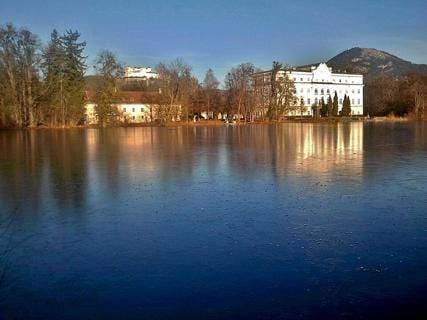
Its lakeside terrace was the von Trapp family's home in The Sound of Music (1965). Because the owners refused permission to film at the palace itself, some scenes were shot on the neighbouring property using replicas of its gates.
Read the full story
The house
A rococo palace built in 1736 beside a lake on the edge of Salzburg, once owned by the theatre director Max Reinhardt.
The full story
Guests have included presidents, princes and billionaires. Fans on bus tours photograph it from across the lake.
The film turned a private palace into one of the most photographed buildings in Austria, and eventually into a hotel business.
Where it stands now
After a major restoration it opened in 2014 as Hotel Schloss Leopoldskron, with three Sound of Music themed rooms, and later added a year-round Sound of Music exhibition. The palace is open only to hotel guests.
The real home of the family behind The Sound of Music (1965)
Neighbours fought the hotel plan
The family's story inspired The Sound of Music, although the film used other houses for their home.
Read the full story
The house
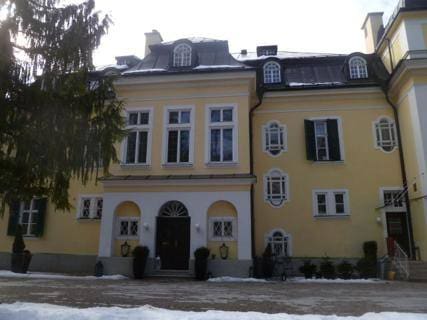
A large villa in the leafy suburb of Aigen in Salzburg, the real home of the von Trapp family before they fled the Nazis.
The full story
Surviving von Trapp children returned to see the house before it opened.
It shows the other side of screen tourism: the neighbours who never asked for it.
Where it stands now
When plans emerged to open it as a hotel, neighbours protested that fans and coaches were already clogging their street, and the city's planning committee at first blocked the scheme. The organisers appealed, and the villa now operates as a small hotel.
The numbers
Hotel plan
blocked by the city after neighbours' protests, then appealed
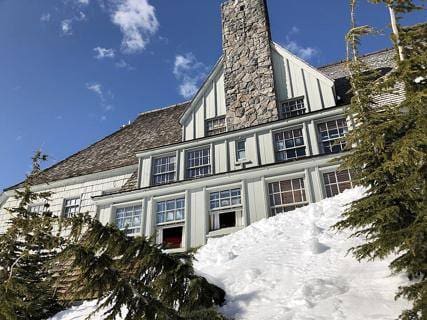
Its exterior was the Overlook Hotel in Stanley Kubrick's The Shining (1980). The interiors were built at Elstree Studios in England.
Read the full story
The house
A stone and timber lodge built in 1937 on the slopes of Mount Hood, Oregon, now a National Historic Landmark.
The full story
The lodge reassures guests on its website that it is not haunted.
It is a neat case of a business trying to avoid a horror association, only for fans to seek it out anyway.
Where it stands now
The lodge asked Kubrick not to use room 217, the haunted room in Stephen King's novel, in case it put guests off. The film used a non-existent room 237 instead. Room 217 is now the lodge's most requested room.
It was Kellerman's, the Catskills resort, in Dirty Dancing (1987). Baby's cabin and the gazebo where the dance lessons happened are still there.
Read the full story
The house
A historic stone lodge in a 2,600-acre nature preserve in the mountains of south-west Virginia.
The full story
It also hosted a television dance competition based on the film.
A film made decades ago keeps filling rooms every season, which is worth more to its owners than any one-off premium.
Where it stands now
The lodge now runs Dirty Dancing weekends with dance lessons, location tours and screenings, and they regularly sell out. Themed weeks have been reported at roughly $1,068 to $4,500.
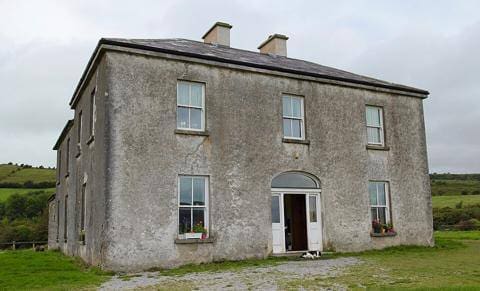
It was the parochial house on Craggy Island in Father Ted (1995 to 1998), home of Fathers Ted, Dougal and Jack and Mrs Doyle.
Read the full story
The house
A farmhouse in the Burren in County Clare, known as Glanquin.
The full story
There is no parking, and the house no longer appears as 'Father Ted's house' on Google Maps.
Like Hyacinth Bucket's bungalow, the owners lived with the fame rather than selling it.
Where it stands now
For years the family who own it welcomed fans in for afternoon tea. They stopped in 2021, and it is now simply a private home; fans can photograph it from the road.
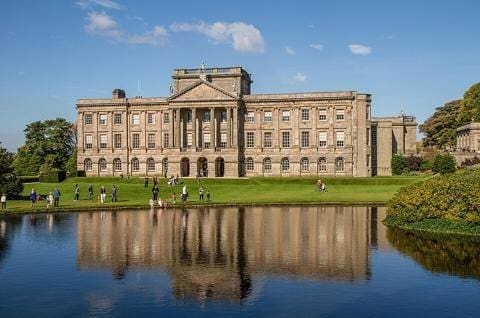
It was Pemberley in the BBC's Pride and Prejudice (1995), where Colin Firth's Mr Darcy emerged dripping from the lake, one of the best-known scenes in British television.
Read the full story
The house
A Palladian mansion in a 1,300-acre deer park on the edge of the Peak District in Cheshire, home of the Legh family for 600 years and given to the National Trust in 1946.
The full story
The National Trust now runs Austen events and lets visitors try on Regency dress. It has also had to plan for much bigger car parks.
This is the classic 'Pemberley effect': one scene changing a house's fortunes for decades.
Where it stands now
Visitor numbers are widely reported to have tripled, from 32,852 in the year before the series to 91,437 in the year after.
It was the Cohen family's 'Newport Beach' home in The O.C. (2003 to 2007), though it is in Los Angeles County and has no pool house; Ryan's pool house was elsewhere.
Read the full story
The house
An Italian-style villa on about four acres overlooking the ocean in Malibu.
The full story
The agent said Malibu buyers want beach and good schools, and few were swayed by the show.
Another famous house that sold below asking.
Where it stands now
Listed in 2015 at $6.25 million, it attracted inquiries from around the world and sold that December for $5.94 million.
It was the grand prize in a Fox and Pepsi contest. Builders studied more than 100 episodes to match colours and furnishings, and around 30,000 people toured it, including the show's creator.
Read the full story
The house
A four-bedroom house on Red Bark Lane in Henderson, near Las Vegas, built in 1997 as a full-size replica of the Simpsons' home.
The full story
It cost around $120,000 to build and was valued at about $150,000.
It may be the purest test on this map of what screen fame is worth to a buyer. The one person who could have had it for free preferred half its value in cash.
Where it stands now
The winner, offered the house or cash, took $75,000 instead. The house sat empty for about four years, was repainted to fit in with the neighbours and sold in 2001 as an ordinary home.
The farm that inspired Anne of Green Gables, on screen in 1934 and 1985
Painted green to match the story
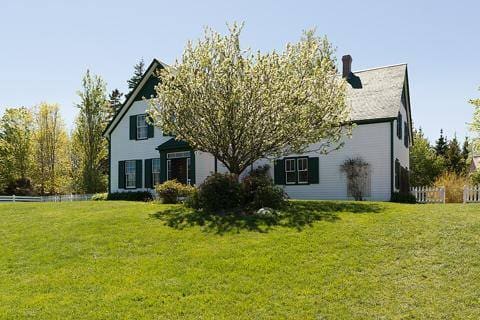
It inspired the Cuthbert farm in Anne of Green Gables (1908), and fame grew with the 1934 film and the 1985 television series.
Read the full story
The house
A white-shingled 19th-century farmhouse in Cavendish, on the north shore of Prince Edward Island.
The full story
A real farmhouse was changed to look more like a fictional one, because that is what visitors had come to see.
It shows how strongly fans' expectations can reshape a real building.
Where it stands now
The Canadian government bought it in 1937 for a national park. In the 1940s staff painted the gables green and added shutters so the house would match what readers expected. It now draws around 140,000 visitors a year.
Hogwarts classrooms in the Harry Potter films (2001–02)
A whole village owned by one landlord
The abbey's cloisters were used for Hogwarts classrooms in the Harry Potter films, and a village house for the Potters' home in Godric's Hollow in Harry Potter and the Half-Blood Prince. Lacock has also appeared in Pride and Prejudice and Downton Abbey.
Read the full story
The house
A medieval abbey and a whole village of historic houses in Wiltshire, given to the National Trust in 1944 by the Talbot family.
The full story
Living there has been compared to living on a period drama set.
None of these homes can be bought, so screen fame shows up only in footfall.
Where it stands now
Almost every building belongs to the National Trust, and the villagers rent their homes. The village drew tourists even during lockdown.
It was the village of Downton in Downton Abbey, including the church, the hospital and the pubs on Church View.
Read the full story
The house
A stone-built village in West Oxfordshire.
The full story
Some residents worried about what would happen if the crowds kept growing.
Here the value went to the village's businesses rather than to any single house.
Where it stands now
Coachloads of fans from around the world arrived after the series became a hit. Pubs, cafés, B&Bs and shops all reported more trade, and even the village library began selling Downton memorabilia.
The Lutz family home in The Amityville Horror (1979)
Price up fivefold
It stood in for the Amityville house in the 1979 film The Amityville Horror.
Read the full story
The house
A 1920s house in Toms River, New Jersey.
The full story
The real Amityville house was not used in the 1979 film. Instead the producers used a 1920s Dutch Colonial house in Toms River, New Jersey, adding the distinctive quarter-moon windows to make it look the part.
The house had no crime in its past. It carried the film's fame without any of the stigma.
It sold for $350,000 in 2013. When it was listed in 2022 at $1.7 million, it already had an offer pending.
Over the same period the real Amityville house, the scene of the DeFeo murders, sold for well under its asking price. Same story, same fame, opposite results: this pair is the clearest demonstration on the map that it is real death, not notoriety, that costs money.
Where it stands now
It sold for $350,000 in 2013 and was listed at $1.7 million in 2022 with an offer already pending.
Number 4 Privet Drive in Harry Potter and the Philosopher's Stone (2001)
4 Privet Drive, in real life
It played 4 Privet Drive, the home of Harry Potter's aunt and uncle, in the first film, Harry Potter and the Philosopher's Stone (2001). A studio set was built for the later films.
Read the full story
The house
A modern three-bedroom detached house on an estate in Bracknell, Berkshire, about 30 miles west of London.
The full story
When the film first came out, a neighbour said, tour buses came down the road. Fans still turn up in the school holidays.
The agents originally planned to market the house without mentioning Harry Potter at all. Once the connection became news, interest rose sharply.
It is a useful British benchmark: a famous screen home whose price broadly tracked the local market rather than its fame.
Where it stands now
It last sold for £249,000 in 2003. In 2016 it was listed at £475,000, a price comparable to similar homes nearby.
Its grounds were used in Scarface (1983) for Tony Montana's wedding and other scenes, standing in for Miami. Charlie Chaplin and Oona O'Neill married there in 1943.
Read the full story
The house
A Mediterranean-style villa built in 1906 on ten acres of Persian-style water gardens in Montecito, California, known as El Fureidis.
The full story
The estate was designed by the architect Bertram Goodhue and was a famous Southern California garden long before Hollywood found it.
The listing agents later admitted it had been overpriced at first. The film's fame did nothing to hold up the price.
The 2015 buyer was explicit that he had bought the history, not the gangster film. That is a pattern across this map: the buyers who pay most tend to value the house, not the screen time.
Where it stands now
A financier bought it for a reported $20 million in 2008 and listed it in 2014 at $35 million. After cuts to $17.9 million, it sold in 2015 for $12.26 million, a loss of more than $7.7 million. The buyer, who said he bought it for its architecture rather than the film, later relisted it at $39.995 million.
Holly Golightly's building in Breakfast at Tiffany's (1961)
From $1.8m to $12.5m
It was the exterior of Holly Golightly's home in Breakfast at Tiffany's (1961), with Audrey Hepburn on the stoop. Most interiors were filmed in a Hollywood studio.
Read the full story
The house
A four-storey brownstone on East 71st Street on Manhattan's Upper East Side, with olive-green double doors.
The full story
The 2012 seller was the stockbroker involved in the Martha Stewart insider trading case, which gave the house a second, very different kind of fame.
Every sale has been in line with Manhattan townhouse prices rather than above them, and the last two only after cuts.
It is on the tourist trail of the Upper East Side, and the famous doors are still there.
Where it stands now
A broker bought it for $1.8 million in 2000 and sold it for $5.97 million in 2012. Listed at $10 million in 2014 and cut to $8 million, it sold for $7.4 million in 2015. After a major renovation it was listed at $15 million and sold for $12.5 million.
In Rocky II (1979), Rocky and Adrian buy the house with his winnings from the first fight. The filmmakers chose it because they liked the front and knocked on the door.
Read the full story
The house
A three-bedroom brick row house on Lambert Street in South Philadelphia, built in the 1920s.
The full story
A local author of a motivational book about Rocky said he planned to bid for it as the ultimate piece of memorabilia.
Even in Philadelphia, where Rocky is a civic hero, the film did not lift the price.
Where it stands now
The woman who lived there at the time of filming stayed until her death. Her family listed it at $139,900, with the Rocky connection as a selling point. It sold more than $10,000 below asking.
The Byers family home in Stranger Things (from 2016)
25 offers, nearly double the asking price
It was the Byers family home in Stranger Things, including the famous scene with Christmas lights strung across the walls. The owners had to put up a barricade and 'private property' signs to keep fans out.
Read the full story
The house
A three-bedroom, two-bathroom house on six acres in Fayetteville, Georgia, south of Atlanta.
The full story
The listing was viewed more than 44,000 times within days.
This is one of the clearest premiums on the map, and like the others it came from a bidding war among fans, not from a typical buyer.
Where it stands now
It was listed in 2022 at $300,000, 'as is' and in need of a complete makeover. It drew 25 offers, and the winning bid was nearly double the asking price. The buyer, an investor whose family are fans, planned to restore it to match the show and let it on Airbnb.
Its exterior was the collapsing fixer-upper in The Money Pit (1986), starring Tom Hanks and Shelley Long. The disasters were filmed on a set; the real house was owned by an Olympic sailing champion.
Read the full story
The house
A 14,000-square-foot Gilded Age mansion built in 1898 on five acres in Lattingtown, on Long Island's North Shore.
The full story
'We definitely could have done the sequel,' one of the owners said of the renovation.
A local broker blamed the size and style of the house, not the film.
It is the most fitting story on this map: the real house turned out to be exactly what the film warned about.
Where it stands now
In 2002 a couple bought it for $2.12 million and found it falling apart. They spent $5.9 million restoring it and listed it in 2014 at $12.5 million. It finally sold in 2019 for $3.5 million, a loss of about $4.5 million.
The Nelson family home in The Adventures of Ozzie and Harriet (1952–66)
A TV family's real home
It was the real home of the Nelson family and the set of their own sitcom, The Adventures of Ozzie and Harriet (1952 to 1966).
Read the full story
The house
A 1916 East Coast-style house on half an acre in the Hollywood Hills.
The full story
It is unusual on this map because the TV family really did live there.
Where it stands now
It previously sold for $3.025 million. In 2014 the actor Christopher Meloni bought it for $5.25 million, and in 2020 he listed it at about $6.5 million.
No homes match. Clear the search or choose another filter.
Enjoyed this? Pass it on
How we made this map
Compiled by Bettermove from published reports. Prices and dates are as reported in the source linked under each story; where a home has sold several times, we show each sale. Outcomes describe the most recent reported position.
Private homes are identified by street or neighbourhood only, as in the published sources. Please respect the people who live in them and view from the street.
Photos are from Wikimedia Commons and Flickr under open licences, credited on each story. Homes without an openly licensed photo show an illustration. Hero photos: The Mrs Doubtfire house, Saul0331, CC BY 3.0; Downton Abbey, Richard Munckton from Windsor, Melbourne, Australia, CC BY 2.0.